

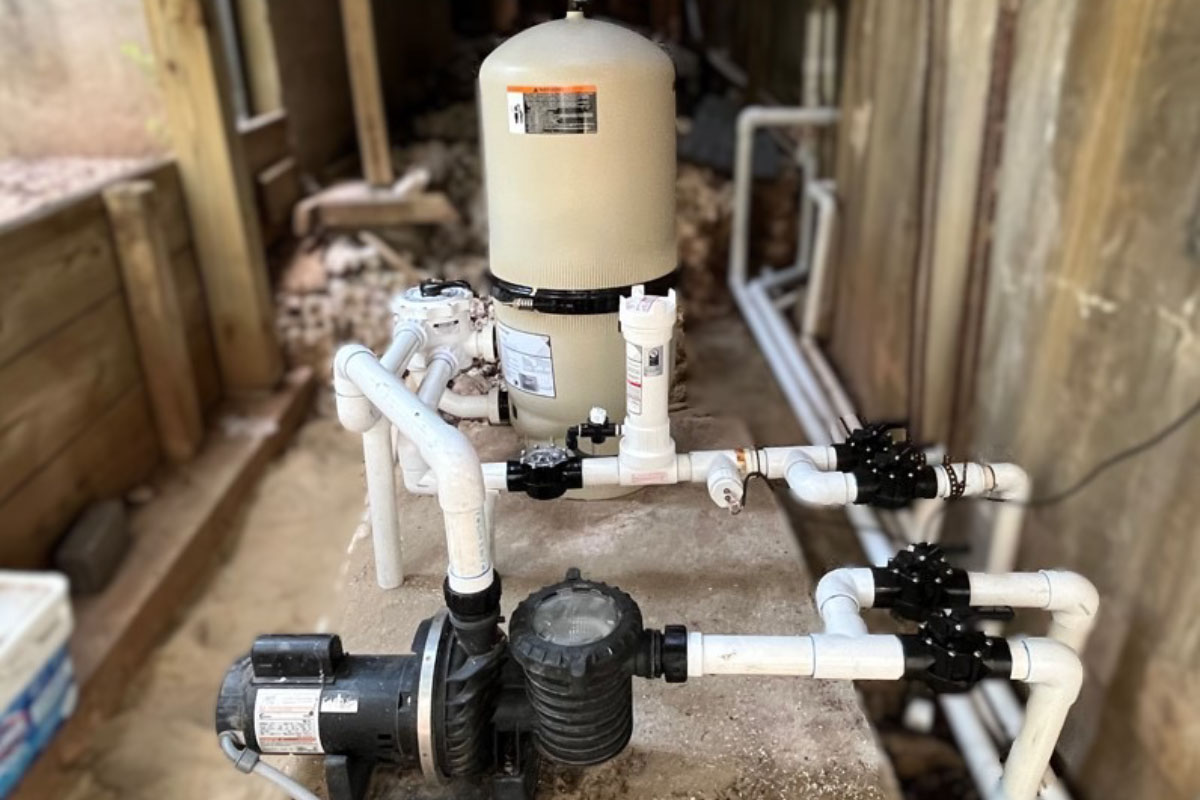
Have you ever thought of your swimming pool pump as the heart of your swimming oasis? Often referred to as the filter pump, it plays a crucial role in circulating and filtering your swimming pool water, ensuring it stays clean, clear, and inviting. But did you know that not all pumps serve the same purpose? If you have a pump dedicated to powering a water feature rather than filtration, it’s known as a water feature pump.
So, what makes up this essential piece of swimming pool equipment? Every swimming pool pump shares a few basic components:
Suction Manifold Pipes
These pipes connect to the front of the pump, commonly called the pump pot, and draw water from your swimming pool into the system.
Pump Housing
The pump pot leads into the pump housing, where key internal components such as the diffuser and impeller are located.
Impeller
This vital component is attached to the motor shaft, typically using threads or a reverse-threaded screw. It spins rapidly to move water through the swimming pool circulation system.
Shaft Seal
Made up of two halves—one ceramic and one carbon—this seal prevents water from leaking along the motor shaft. One half is mounted on the impeller, while the other sits inside the seal plate, which bolts directly onto the motor.
Motor
The motor is the powerhouse of the swimming pool pump. It drives the impeller and is connected to your swimming pool controller through an electrical whip, providing the energy needed for continuous circulation.
Most swimming pool pumps are designed to be self-priming, meaning they can fill with water automatically as long as there are no air intrusions. Air leaks—caused by cracks, faulty glue joints, or poorly sealed plumbing—can disrupt priming and reduce efficiency.
When the swimming pool pump turns on, the motor spins the impeller at high speed while the diffuser helps remove trapped air. As the pump pot and housing fill with water, a vacuum is created that pulls water from your swimming pool. This water then passes through the filtration system before returning to your swimming pool, keeping the water clean and balanced.
Because swimming pool pumps run for long periods—often eight hours or more each day, regardless of weather—they experience more wear and tear than most other swimming pool equipment. Over time, components can fail, overheat, or burn out, making routine maintenance essential.
Since your entire swimming pool system depends on the proper operation of your pump, addressing swimming pool pump issues should always be a top priority. For accurate diagnosis and reliable repairs, it’s best to rely on experienced professionals like the team at Reliable Pool Care, whose expertise ensures your swimming pool pump and equipment continue running smoothly year-round.